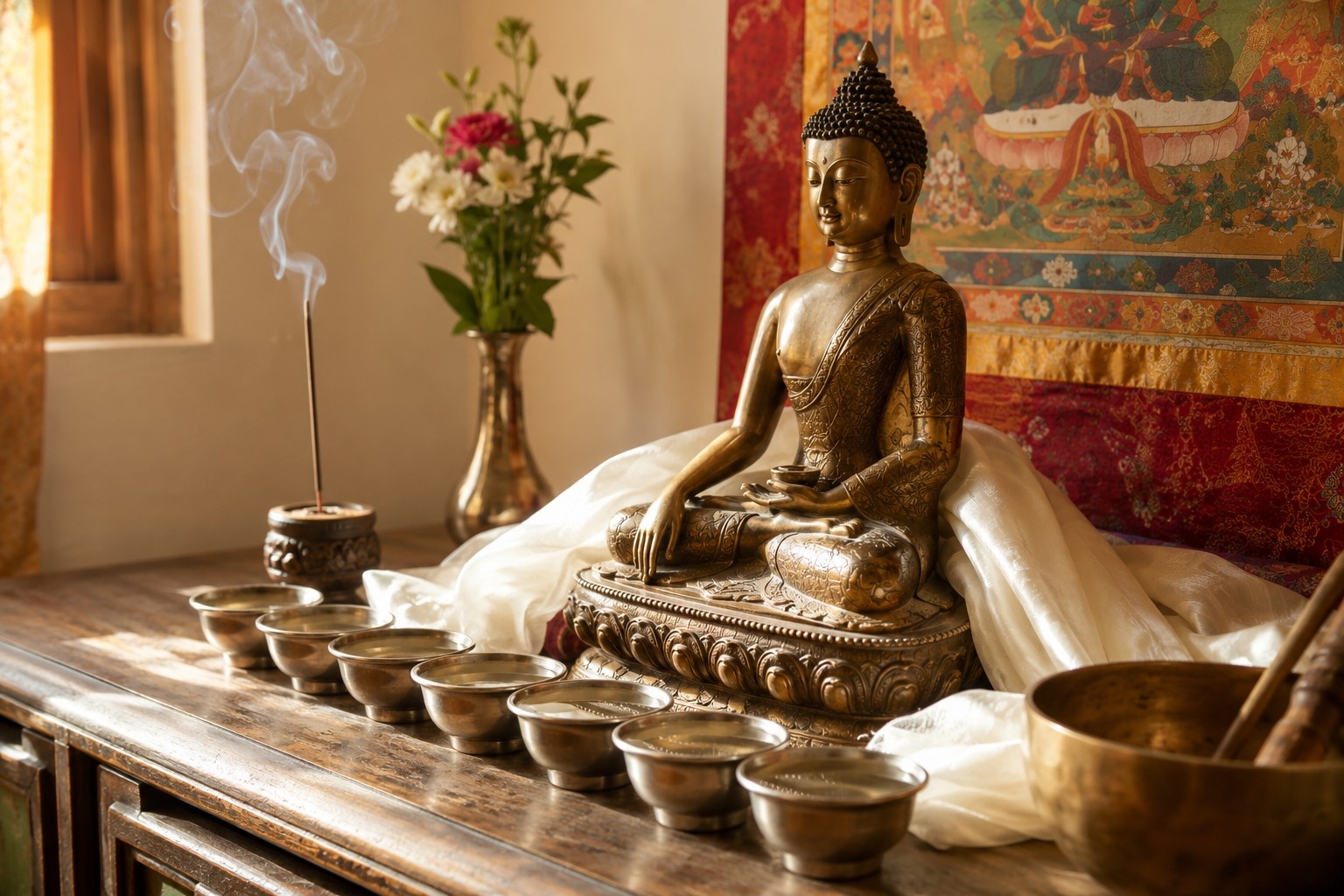
In Tibetan households, the Chokshom, the sacred home shrine, has been a natural part of daily life for centuries. It is a carefully prepared space for offerings and prayer, where representations of the Buddha, traditional offering bowls, incense and light come together to give life a spiritual centre. This article explains what makes a Tibetan home altar, which objects belong on it, and how to set one up and care for it with respect and attention.
A time of reflection, generosity and inner renewal.
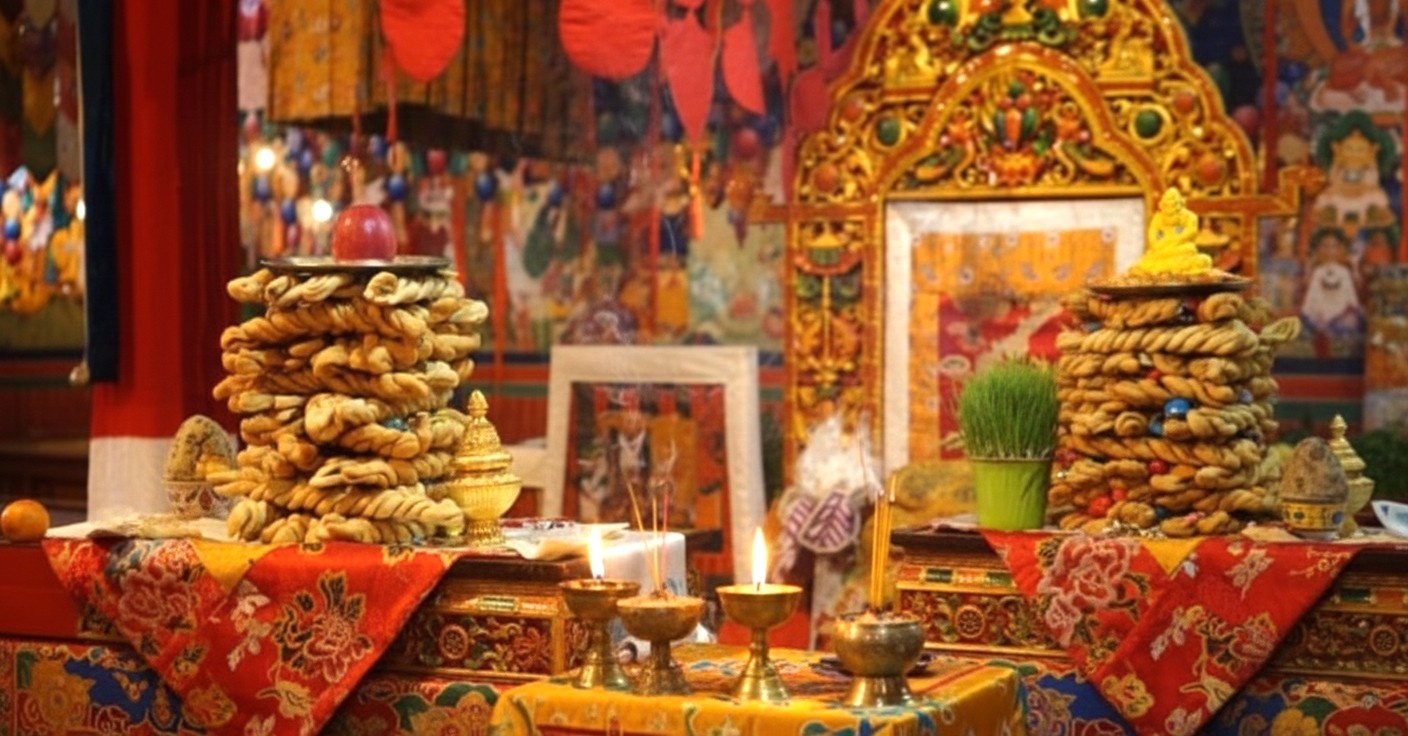
There is something quietly profound about the way the Tibetan New Year arrives. It does not announce itself with fireworks or countdown clocks. It comes instead through weeks of careful preparation, through the scent of juniper smoke rising from an altar, through the sound of prayers spoken softly in the early morning. Losar, as the Tibetan New Year is known, is one of the most significant festivals in Tibetan culture and Buddhism. And for those of us living fast, full lives in the modern world, its wisdom feels surprisingly close to home
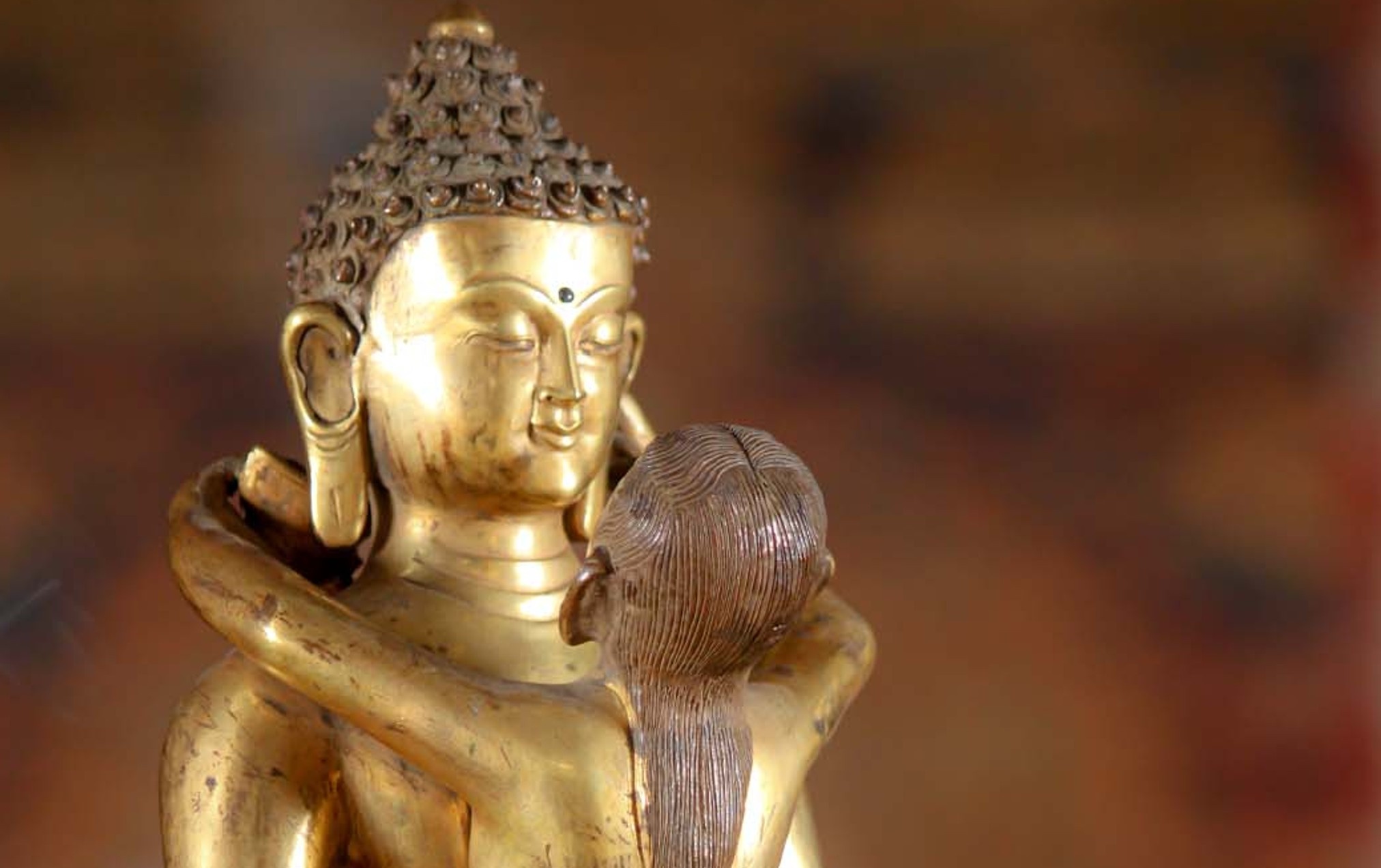
When one looks at a Tibetan Yab-Yum image, the sight is immediately striking. Two divine figures sit in close embrace, perfectly balanced, radiating a sense of calm intensity. To someone unfamiliar with Buddhist art, it may look mysterious, even unusual. But to those who know its meaning, this image is a profound expression of spiritual truth — a symbol of the complete harmony between wisdom and compassion.
There is something deeply moving about stepping into a Tibetan monastery and seeing, right at the heart of its sacred space, a row of shining offering bowls. They are lined up neatly, often seven in number, each one holding water, flowers, rice, or other offerings. To an unknowing visitor, they might appear as simple vessels, yet their presence speaks volumes about Tibetan Buddhism’s understanding of generosity, respect, and the connection between the inner and outer worlds.