What does Buddha mean and which depictions exist in the Tibetan tradition?
The word Buddha comes from Sanskrit and means the awakened one. It is not a personal name but a title, given to someone who has awoken completely from the sleep of ignorance. The historical Buddha, Siddhartha Gautama, was born in northern India around 2,500 years ago and attained enlightenment beneath a bodhi tree in Bodhgaya. But in the Tibetan tradition he is not the only Buddha. He is the Buddha of our age, one of countless Buddhas of past, present and future.
This idea changes everything. A Buddha is not a single historical event. Awakening is a possibility present in every being. The Tibetan tradition calls this buddha nature, the original purity of mind, which no ignorance can permanently obscure. To place a Buddha statue on the altar is to keep that possibility in view each day.
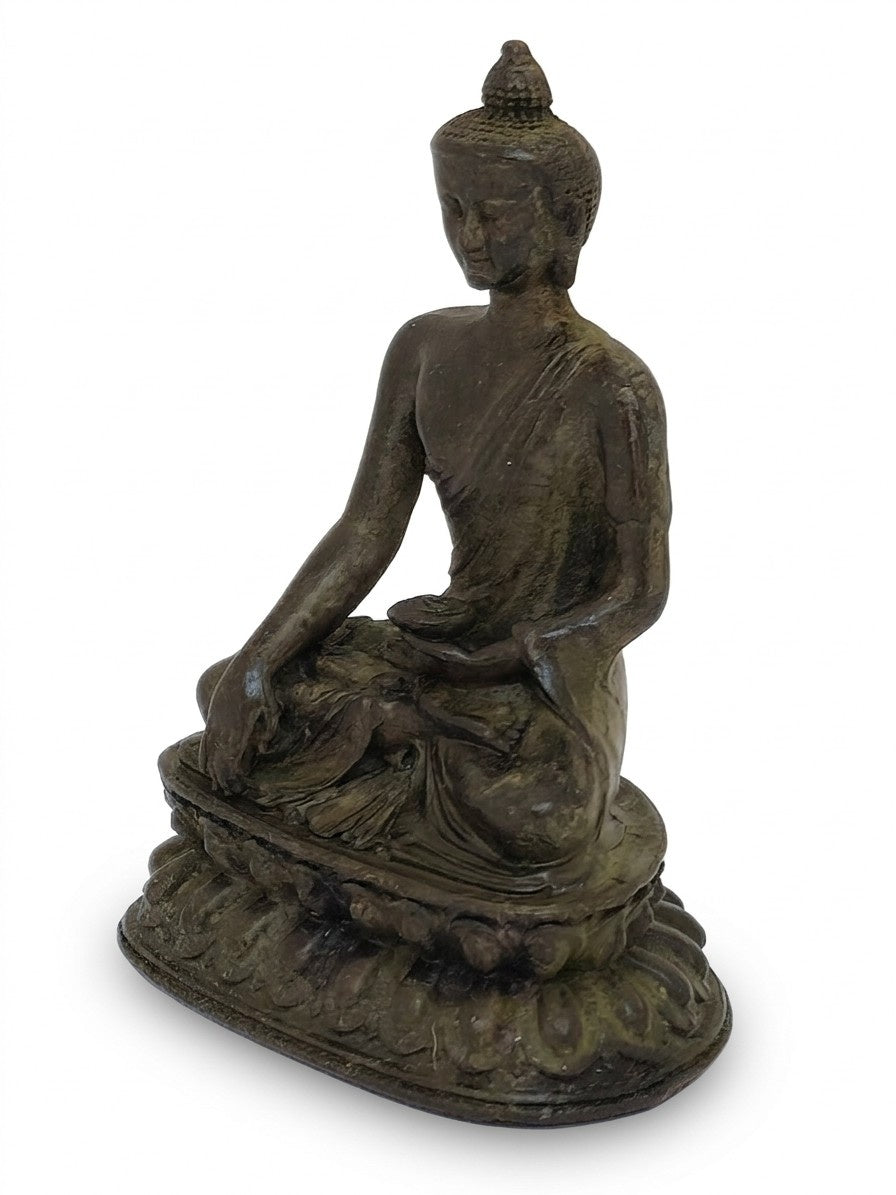
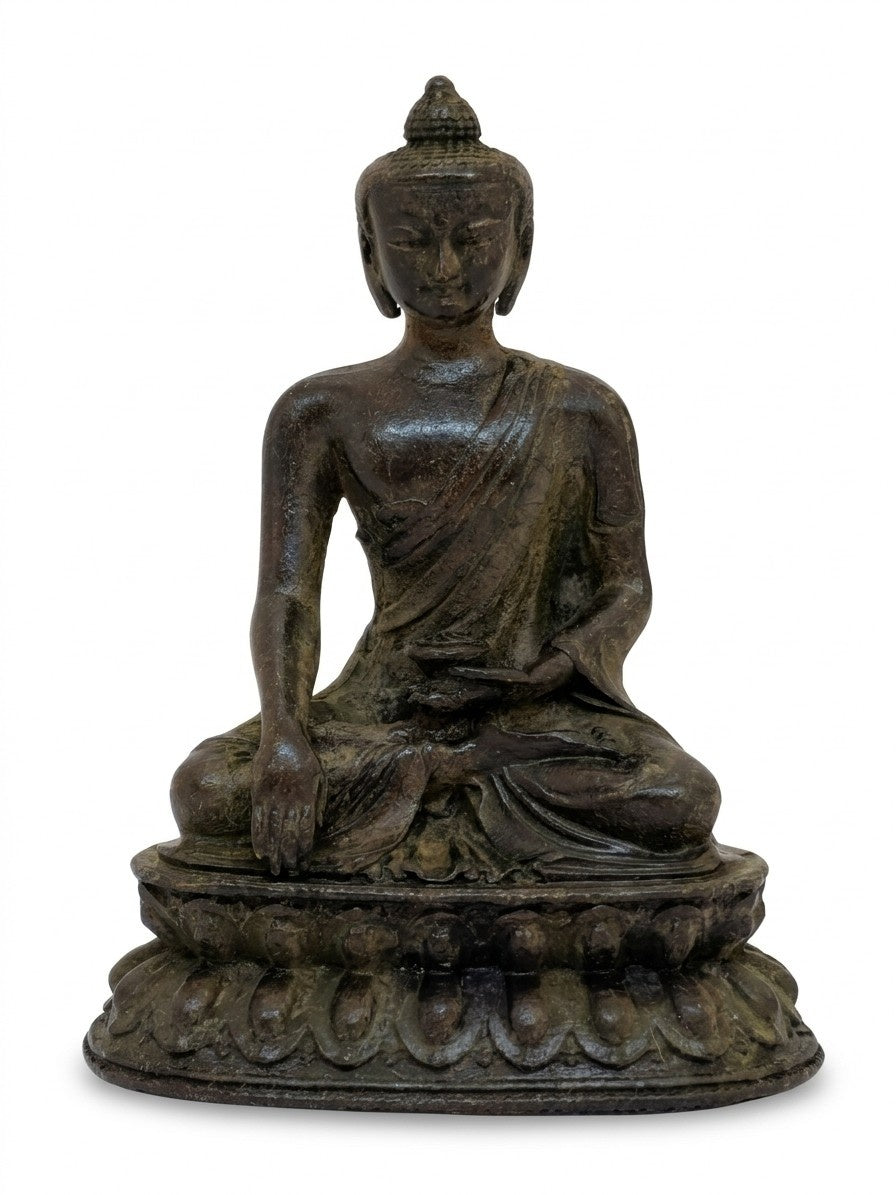
Tibetan art holds many depictions of the Buddha, each with its own meaning and iconographic language. The historical Buddha Shakyamuni is usually shown in the earth-touching gesture, the left hand in the lap, the right hand touching the ground, as a witness to his awakening. Amitabha, the Buddha of Infinite Light, sits in deep meditation with hands folded and presides over the western paradise of Sukhavati. Amoghasiddhi, the Buddha of the northern paradise, shows the gesture of fearlessness. Each of the five Dhyani Buddhas embodies a specific quality of the enlightened mind and a specific colour, direction and energy.
Alongside the classical depictions there is the Medicine Buddha with his deep blue form and the medicinal plant in his hand, the laughing Buddha Hotei, who in the Tibetan tradition is not in fact a Buddha but a Chinese monk, and countless further forms venerated in the various schools and regions of Tibetan Buddhism.
At tibet-markets.ch we carry Buddha pieces in various forms, materials and sizes, all handmade and iconographically correct. Each piece was chosen personally for the care of its finishing and the depth of its presence.