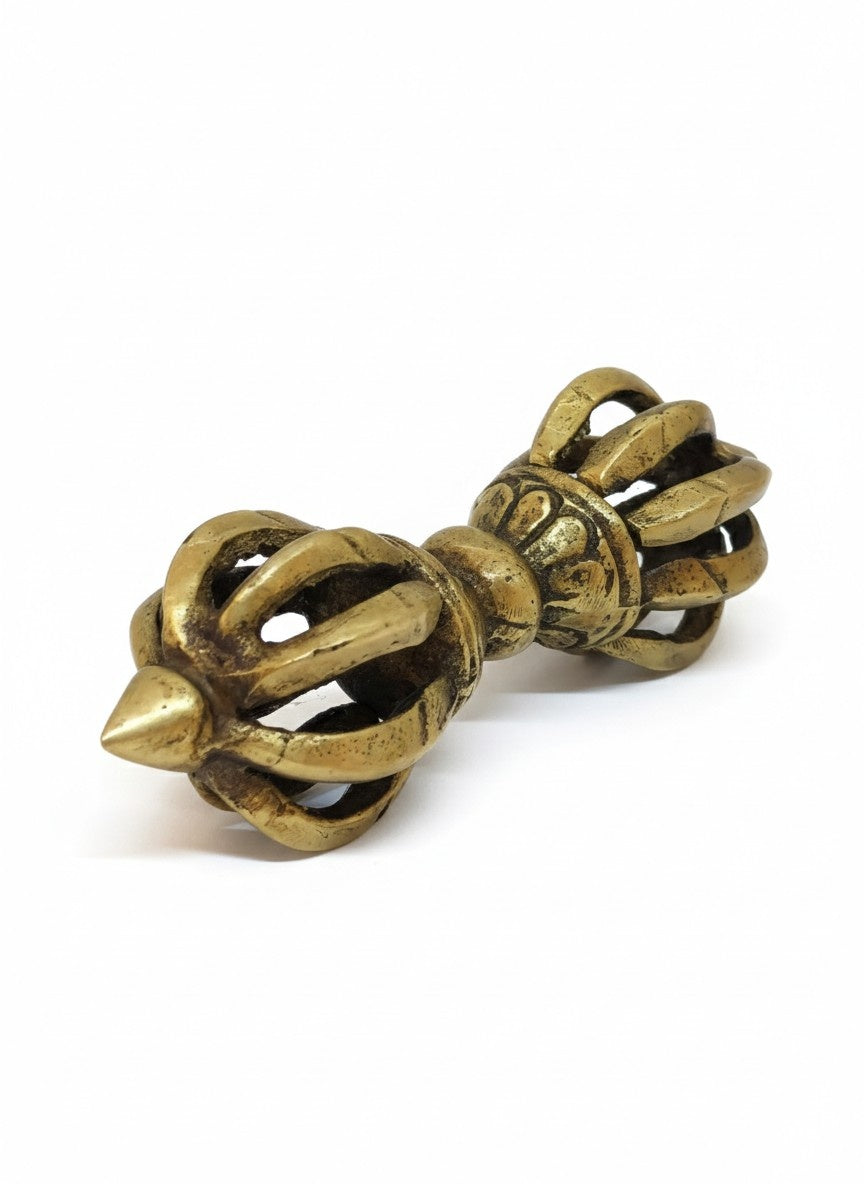
What is a dorje and what does it mean in Tibetan Buddhism?
The dorje, called vajra in Sanskrit, is one of the most significant symbols of Tibetan Buddhism. Its name means thunderbolt or diamond. Two qualities that at first glance have little in common, but together describe something decisive: the indestructible power of the awakened mind, which pervades everything and can itself be destroyed by nothing.
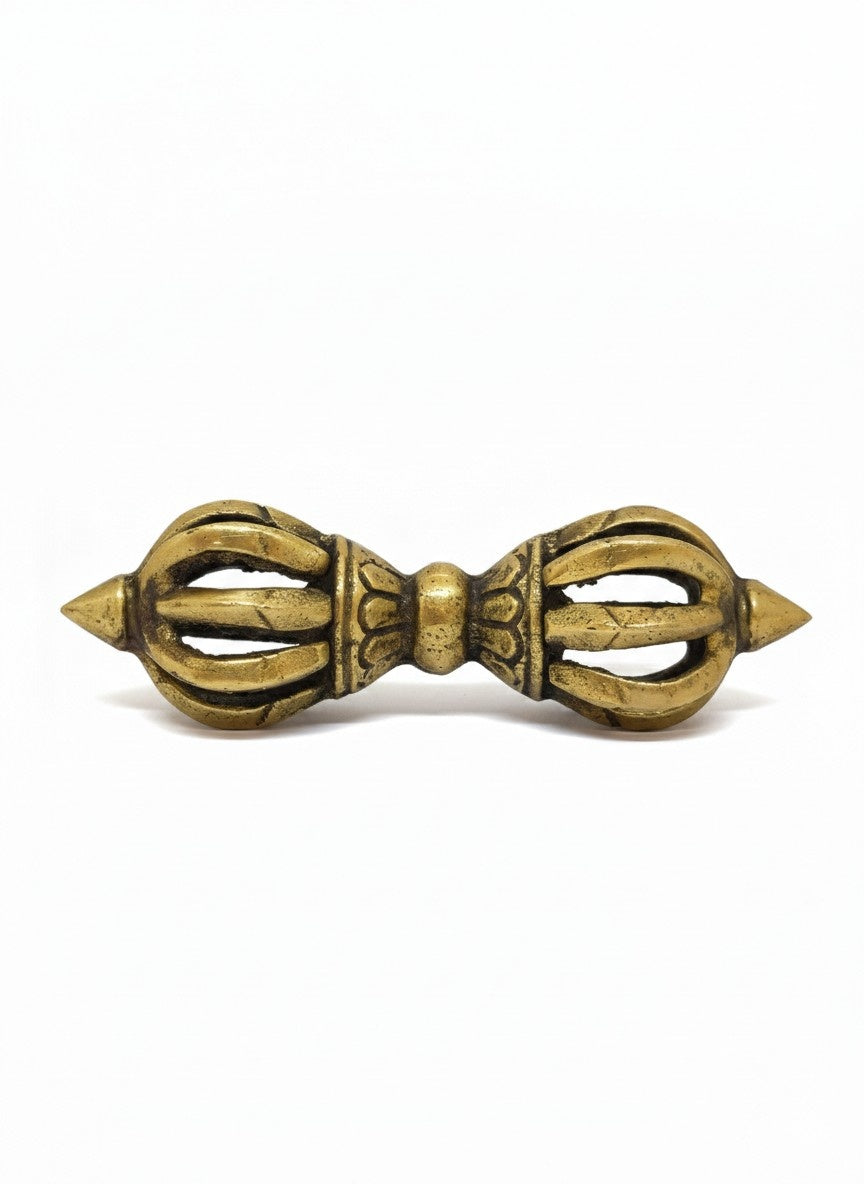
A dorje consists of two symmetrical halves joined in the middle by a sphere. Each half ends in four or eight prongs that come together at a point. This form is not accidental. It symbolises the spread of the energy of awakening in all directions. In ritual practice the dorje is held in the right hand while the left hand holds the bell. Together they embody the unity of compassion and wisdom.
Dorje in brass and bronze are made by artisans in the Himalayas according to traditional specifications. The proportions are fixed, the form has not changed for centuries. What varies is the care of the finishing, the fineness of the engraving and the weight of the piece. A well-made dorje sits well in the hand. It is neither too heavy nor too light and feels familiar from the start.
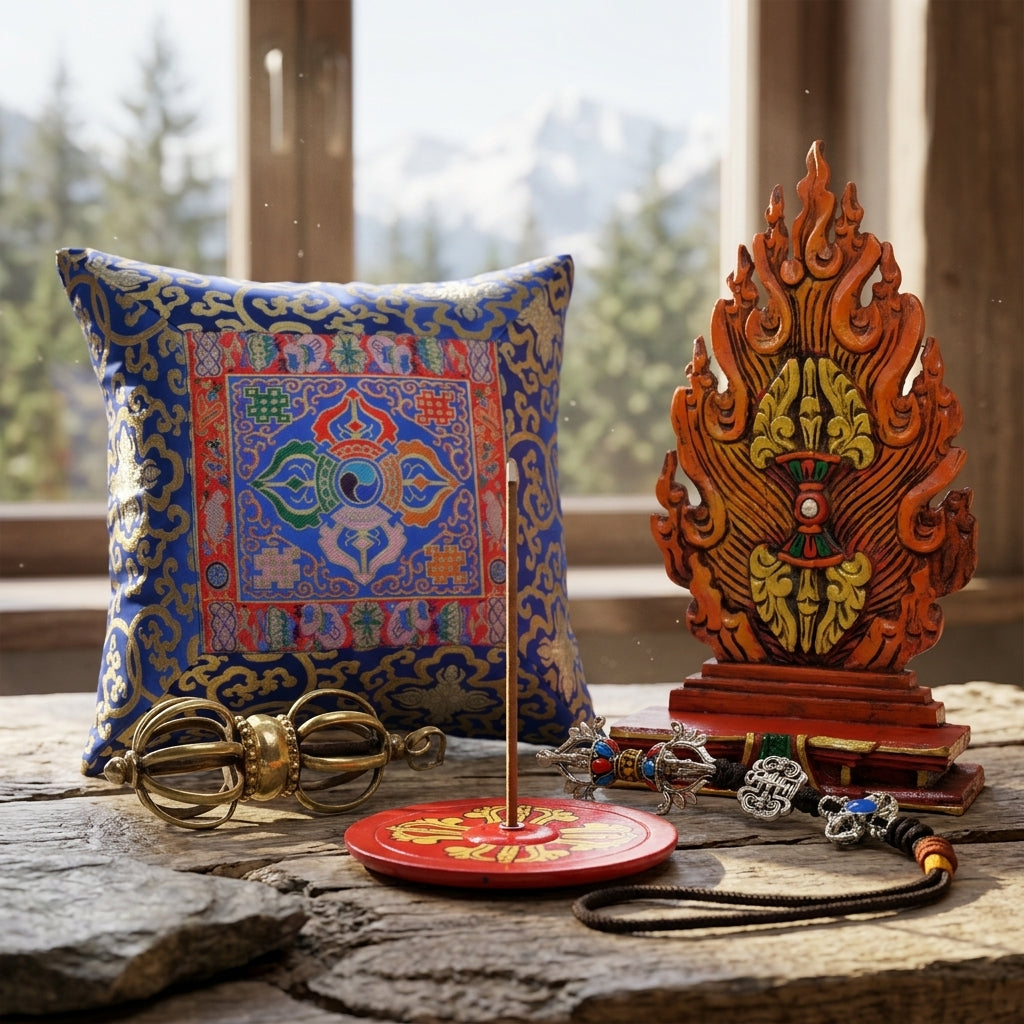
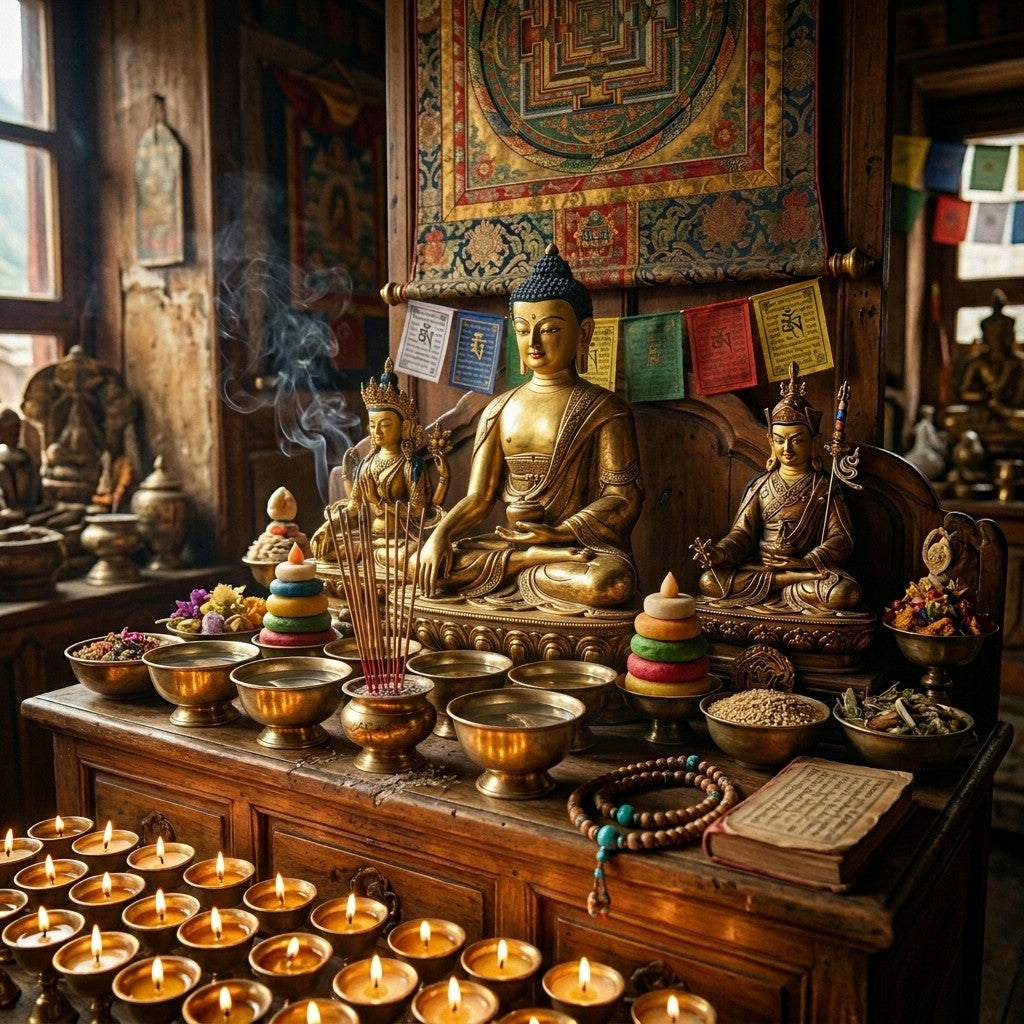
Many people carry a small dorje with them as a personal amulet of protection. Others place it on the altar, alone or together with the bell. Others again use it actively in ritual practice. All three uses are legitimate and each has its own tradition.
At tibet-markets.ch we carry dorje in various sizes and finishes, all handmade and carefully chosen for quality and craft.