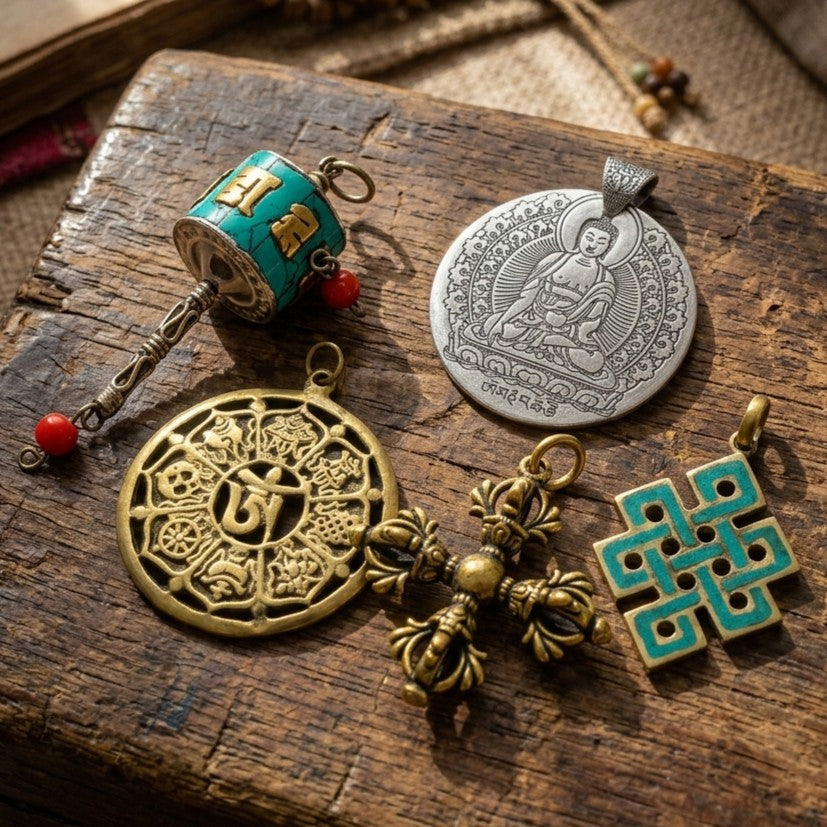
Keychain Prayer Wheel
Sale priceCHF 15.50

Tibetan Handmade Pendant Endless Knot
Sale priceFrom CHF 13.50

Wooden Wall Decoration Endless Knot
Sale priceCHF 27.50

Round-Shape Meditation Cushion With Endless Knot
Sale priceCHF 57.50

Hemp Coin Purse With Embroidery Endless Knot
Sale priceCHF 8.50

Round Zafu Meditation Cushion Cover with Tibetan Endless-Knot Patch-Design
Sale priceCHF 39.50

Tibetan Handmade Pendant Endless Knot Brass and Lapis
Sale priceCHF 15.50

Tibetan Door Curtain Endless Knot, White/Green
Sale priceCHF 43.50

Tibetan Keyring Om and Endless Knot
Sale priceCHF 9.50

Tibetan Door Curtain Endless Knot, red
Sale priceCHF 43.50

Tibetan Endless Knot Cotton Cloth, 90 x 90 cm
Sale priceCHF 42.50

Foldable Hemp Wallet
Sale priceCHF 14.50

Tibetan Prayer Beads Mani Mantra Shell, with Spacer Double-Dorje and Endless Knot
Sale priceFrom CHF 69.50
What is the endless knot and what does it mean in Tibetan Buddhism?
Related categories