What are Tibetan offering bowls and how are they used on the altar?
Offering bowls are among the oldest and most meaningful ritual objects of Tibetan Buddhism. Their use goes back to the earliest days of the Buddhist tradition and has barely changed over the centuries. Whoever places offering bowls on their altar joins a practice that millions of people have kept before them.
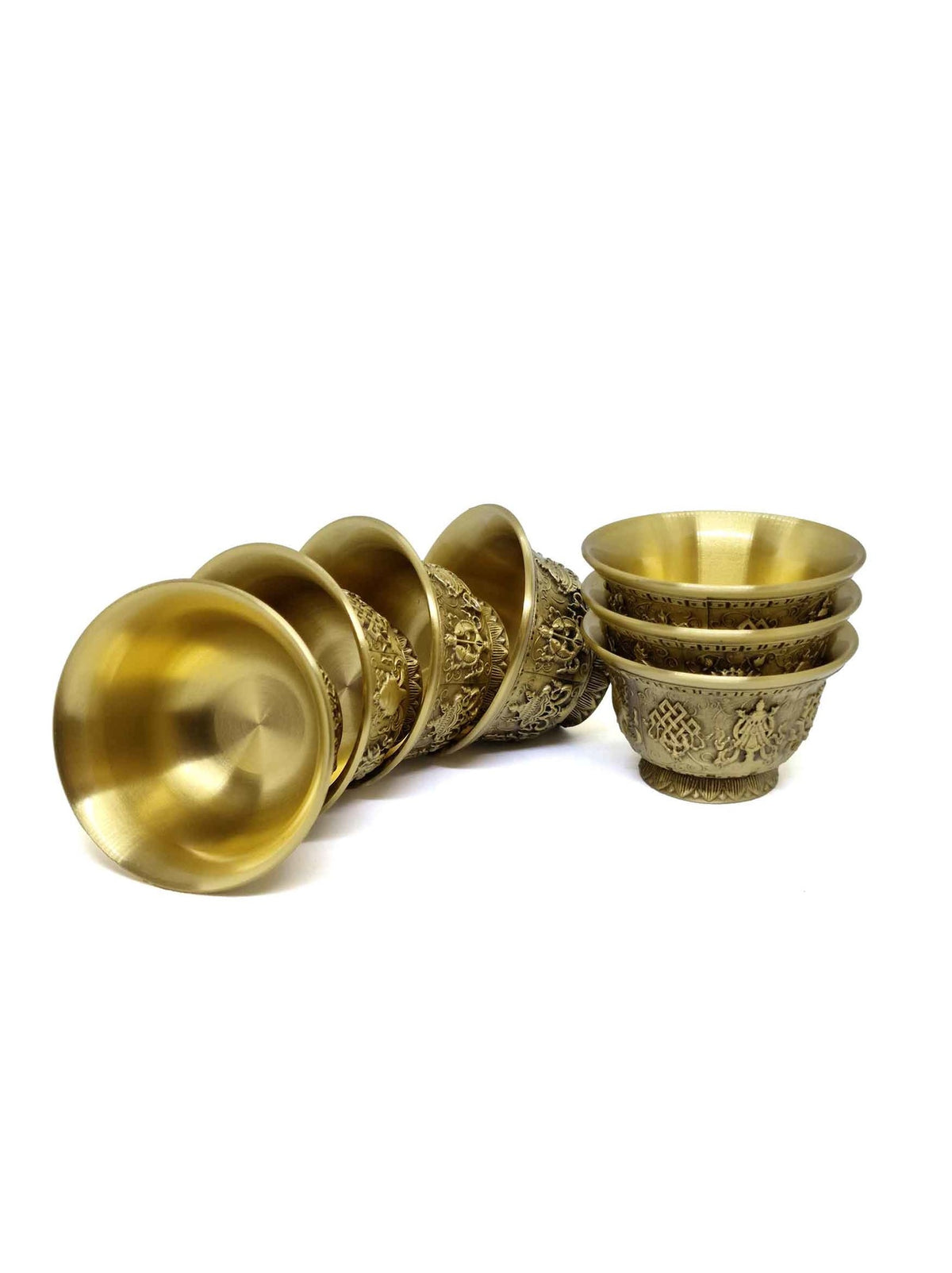
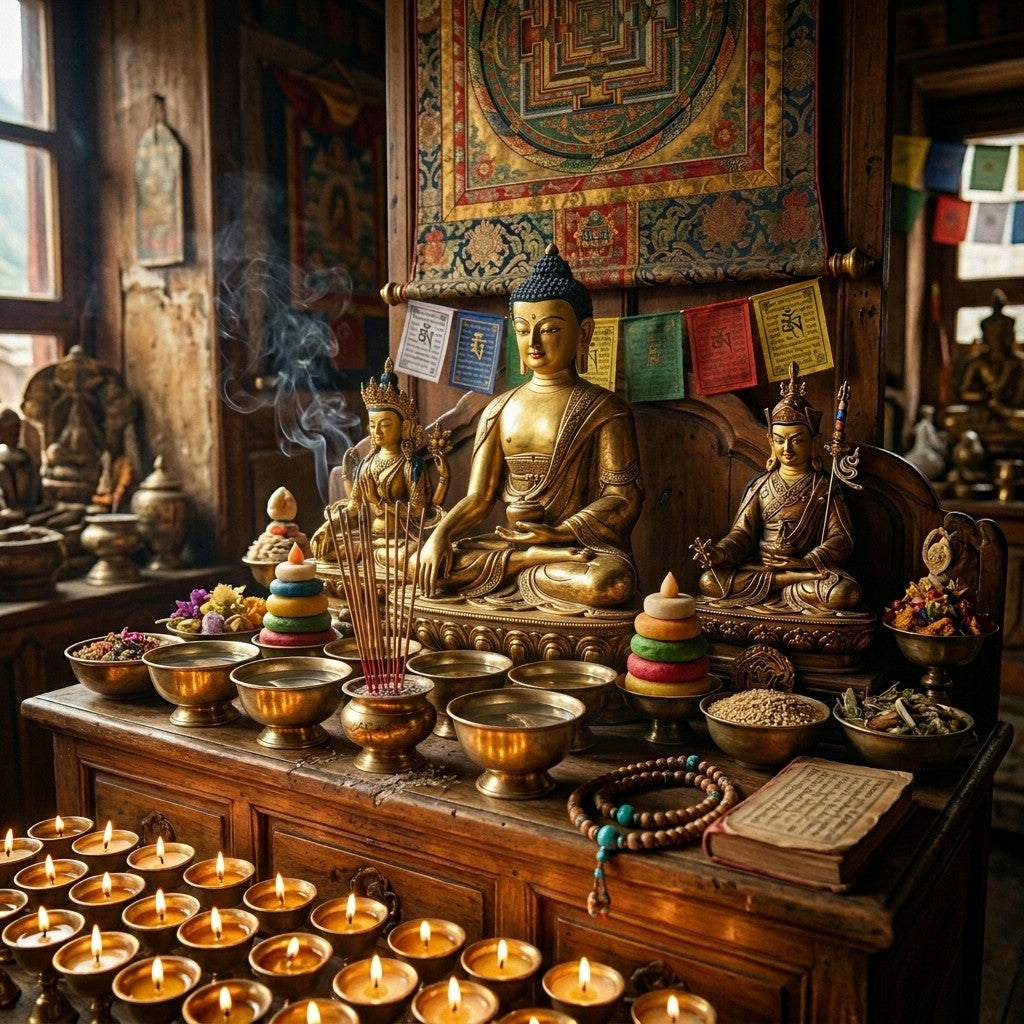
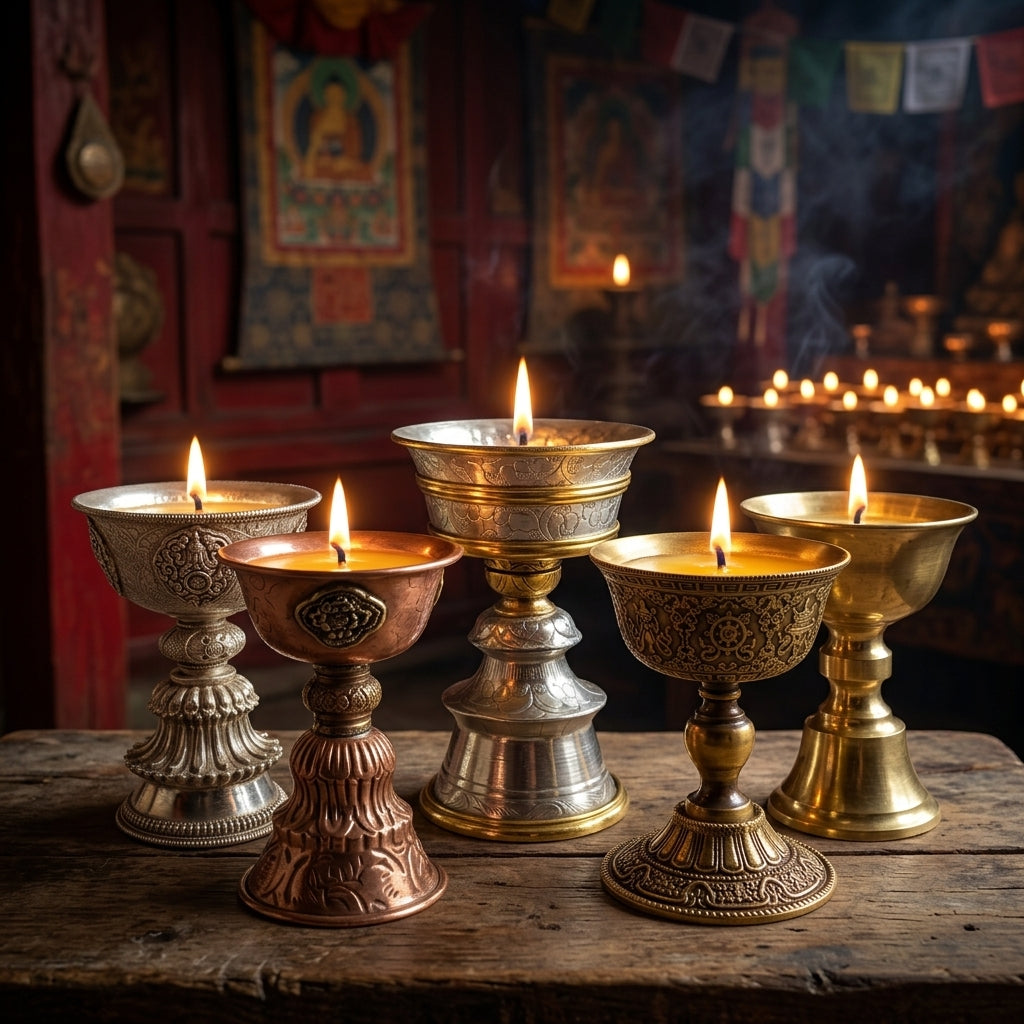
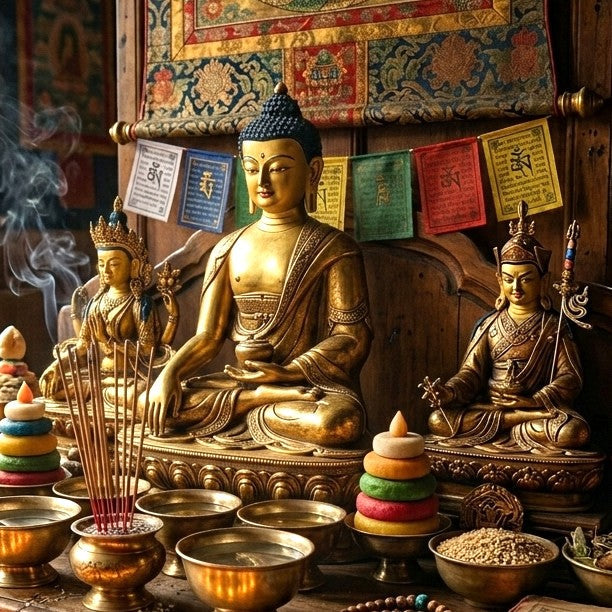
The traditional number of offering bowls on a Tibetan altar is seven. Each bowl stands for one of the seven offerings made to the Buddha, the bodhisattvas and the protective deities. The first bowl holds drinking water, the second washing water for the feet, the third flowers, the fourth incense, the fifth light, the sixth perfume and the seventh food. These offerings are not literal. They are symbolic gestures of generosity and respect.
In daily practice the bowls are filled with fresh water each morning and emptied again in the evening. This simple ritual gives structure to the day and recalls the intention behind the practice. It is one of the most accessible forms of daily devotion, open also to people without extensive training in the Tibetan tradition.
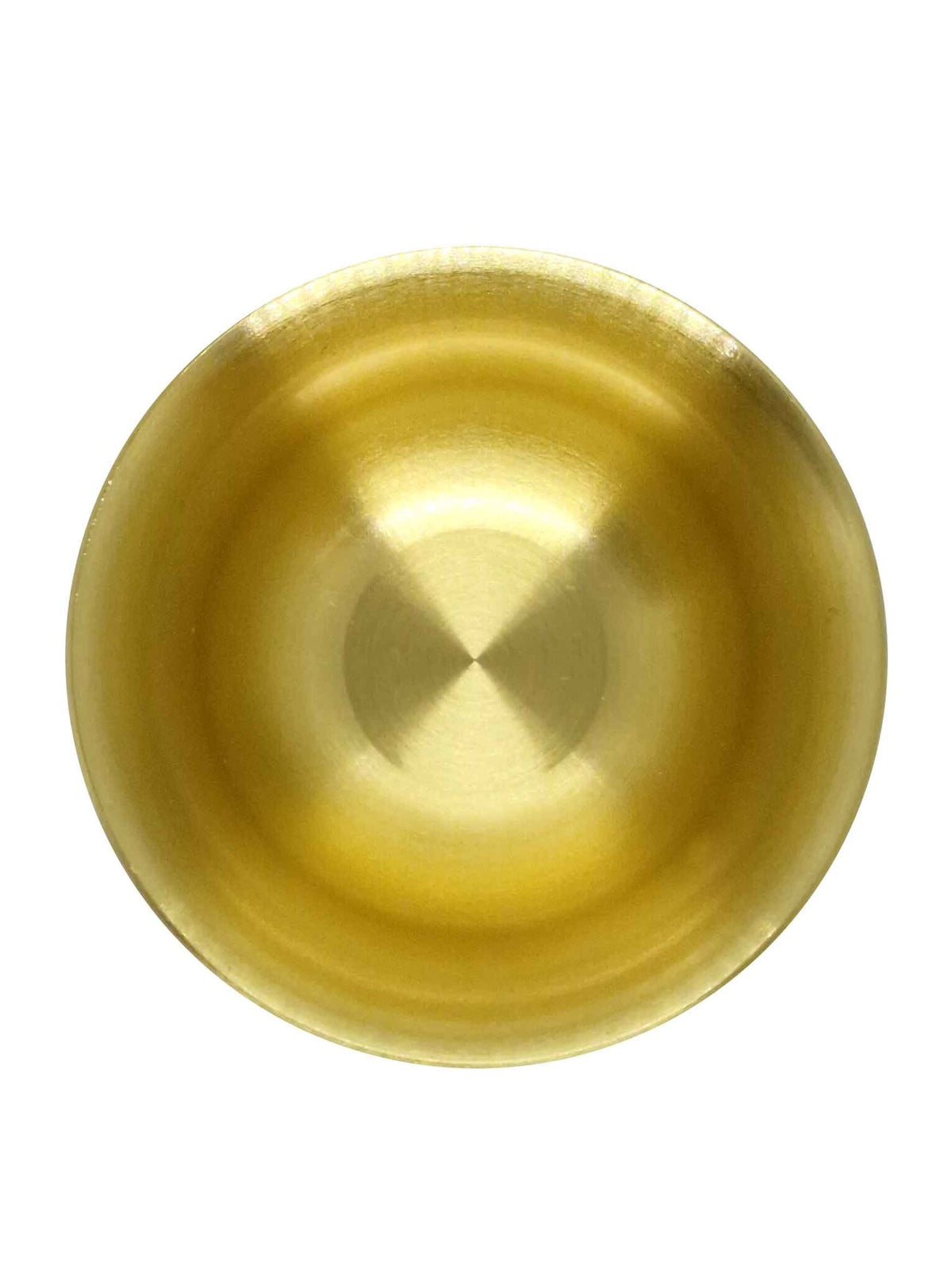
Tibetan offering bowls are made from brass and copper, in various sizes and finishes. Plain, polished bowls hold a timeless elegance. Finely engraved bowls with lotus flowers and mantras are more elaborate and make particularly good gifts. Sets of seven bowls are the most common form and allow for a complete altar arrangement.
At tibet-markets.ch we carry offering bowls singly and as sets, in various sizes and qualities, all handmade and carefully chosen for finishing and material quality.