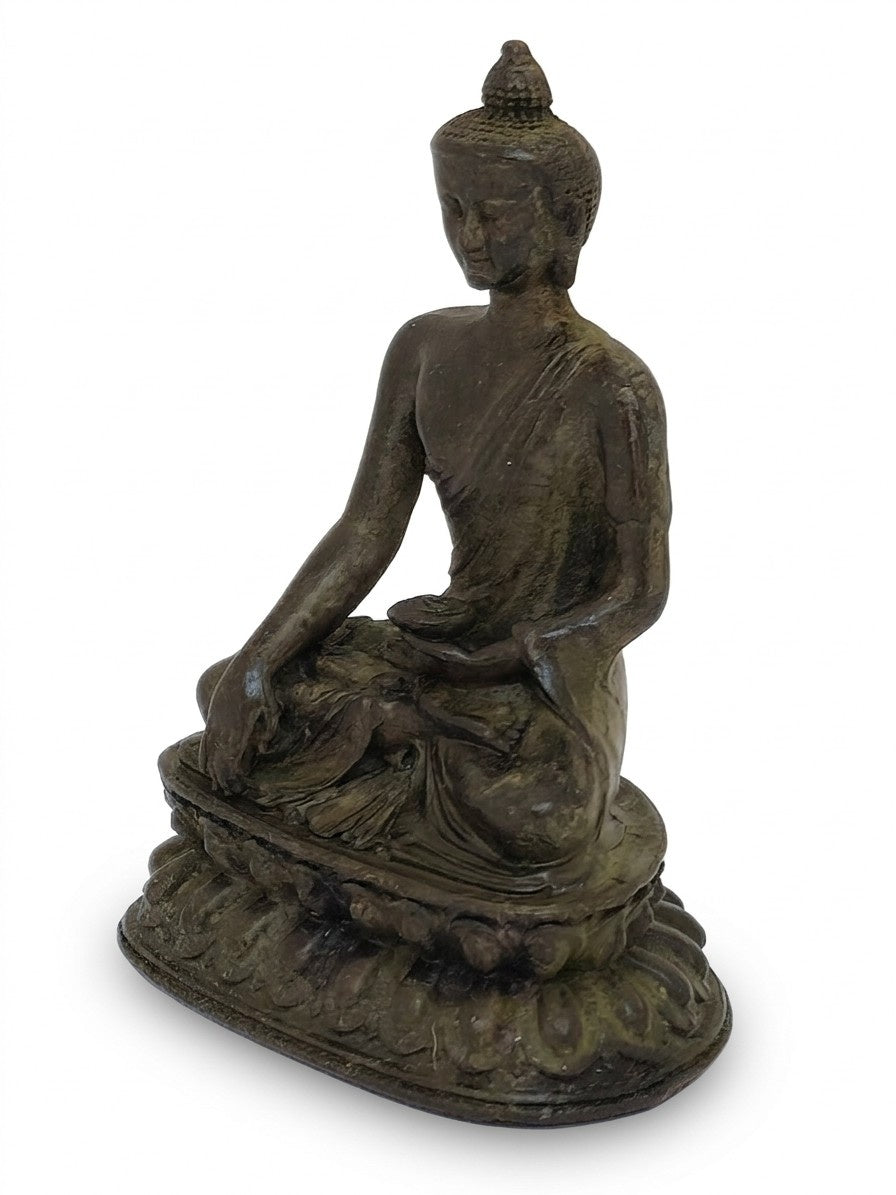
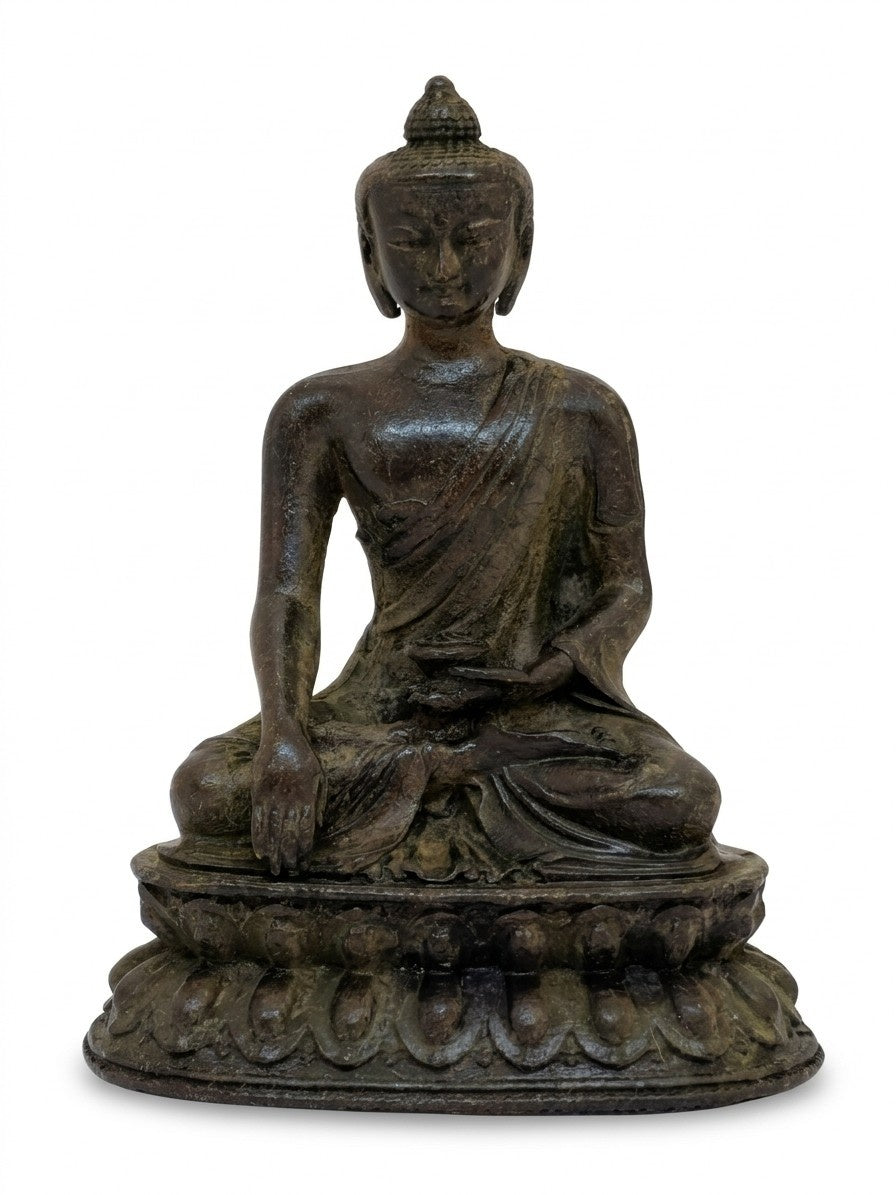
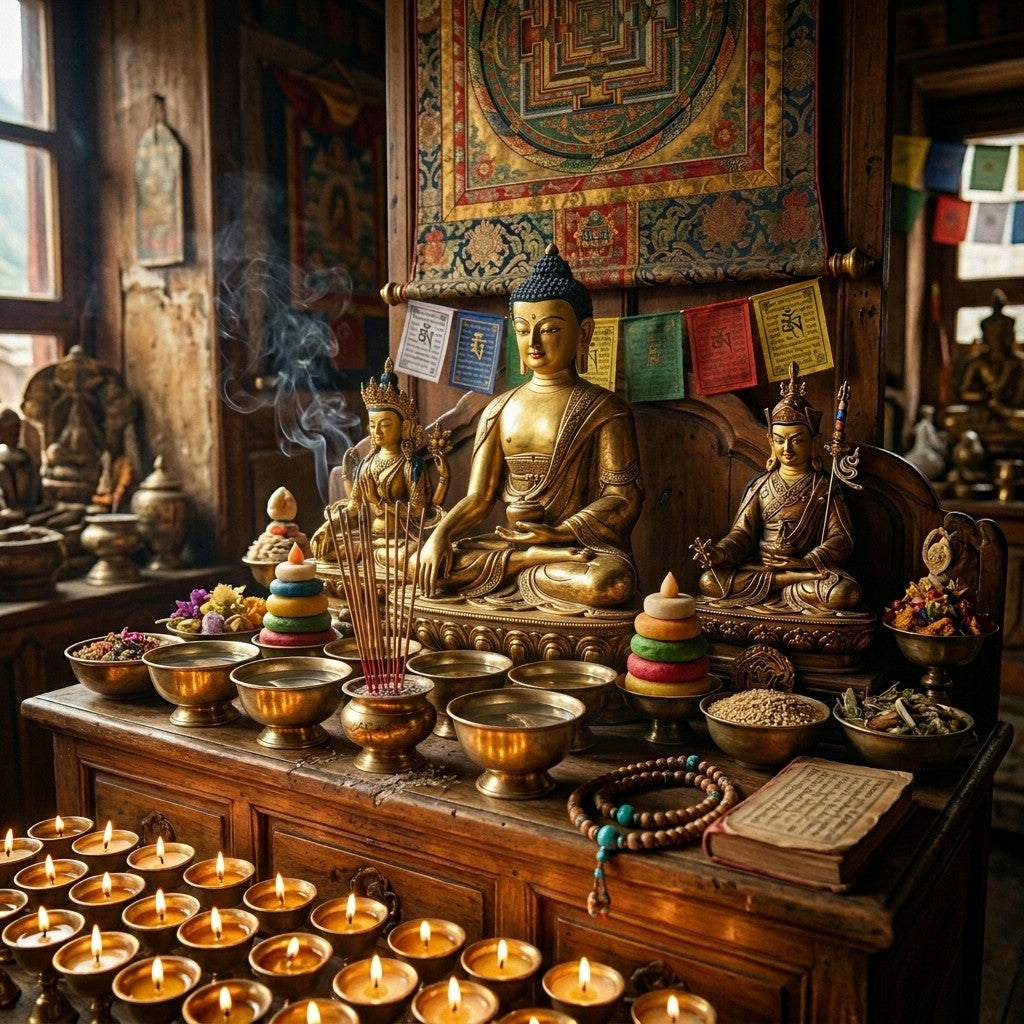
A Buddha statue is not a decorative object but an embodiment. Placing a Buddha statue on the altar invites a quality, not a figure: the calm, compassion and enlightenment that the Buddha embodies.
Our Buddha statues are made by Tibetan artisans in the Himalayas using the centuries-old lost-wax casting process. A wax model is encased in clay, the wax is melted out, and brass, copper or bronze is poured into the hollow mould. Each statue is then finished by hand, polished and often gilded. Because each mould is used only once, no two statues are alike. Quality shows in the fineness of the facial features, the precision of the mudras, the hand gestures, and the care given to the surface.
Tibetan Buddhism has many depictions of the Buddha. The historical Buddha Shakyamuni usually touches the earth with his right hand, the gesture of his enlightenment. Amitabha, the Buddha of Infinite Light, sits in deep meditation, his hands resting in his lap. The laughing Buddha popular in the West, by contrast, depicts the Chinese monk Budai. A small statue suits a personal altar, while a larger one creates a focal point in a living or meditation room. Only statues that move us ourselves find their way into our shop.