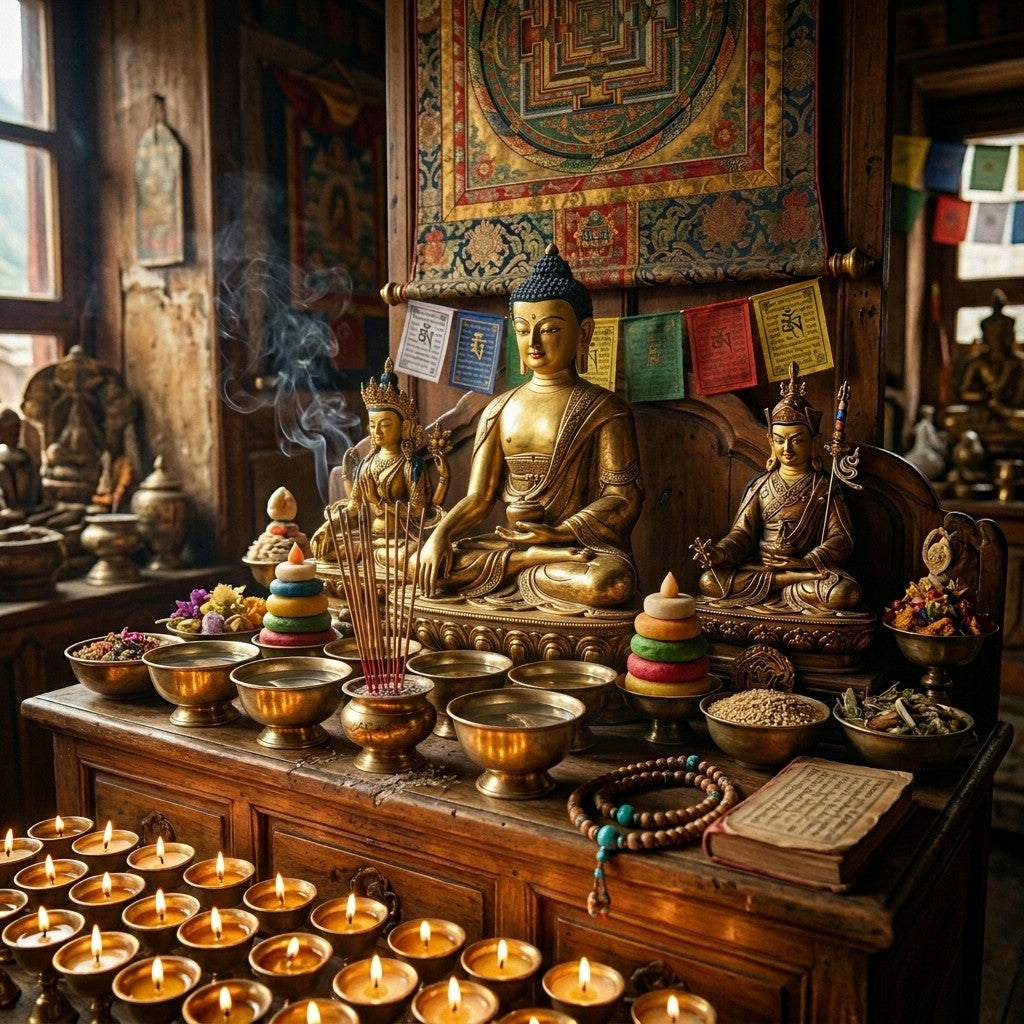
The phurba is a ritual dagger with a three-edged blade from the Tibetan tradition. Symbolically, it stands for banishing obstacles on the spiritual path. A ritual object of great significance, handcrafted by Tibetan artisans in the Himalayas.
What is a phurba and what is it used for in Tibetan ritual practice?
The phurba is a ritual dagger with a three-edged blade from the Tibetan tradition. Like the kartika, it seems puzzling at first glance. Those who know its meaning recognise in it one of the most important ritual objects of Tibetan Buddhism. In Tibetan the name means peg or nail. In the tradition the phurba stands for pinning down obstacles on the spiritual path, like a nail that holds something in place. In ritual practice it is set into the earth or held in the hand while mantras are recited.
Its form is unmistakable. The handle often shows the face of a deity, usually Vajrakilaya, with whom the phurba is especially associated, or Hayagriva. The practice of Vajrakilaya goes back to Guru Rinpoche. The three edges of the blade stand for overcoming the three poisons of the mind: ignorance, attachment and aversion.
Phurbas are made of brass, bronze, iron and wood by Tibetan artisans in the Himalayas. In the tradition, iron phurbas are preferred for ritual practice. Brass phurbas are well suited to the altar or as a collector's piece. Each phurba is handcrafted, so no two are exactly alike. We select them carefully, with an eye to craftsmanship and iconographic accuracy.
Stories from Tibet, new pieces, and a welcome gift. Sign up and receive 10% off your next order. The code arrives by email. You can unsubscribe at any time.
Shipping from Zurich
CH/FL 1–2 working days. Free from CHF 90
14-day returns
Not satisfied? No problem. We take it back.
We're here for you
Online, by phone or in person at our shop in Zurich.
Authentic & Handcrafted
Every piece from Tibetan craftspeople in the Himalayas.