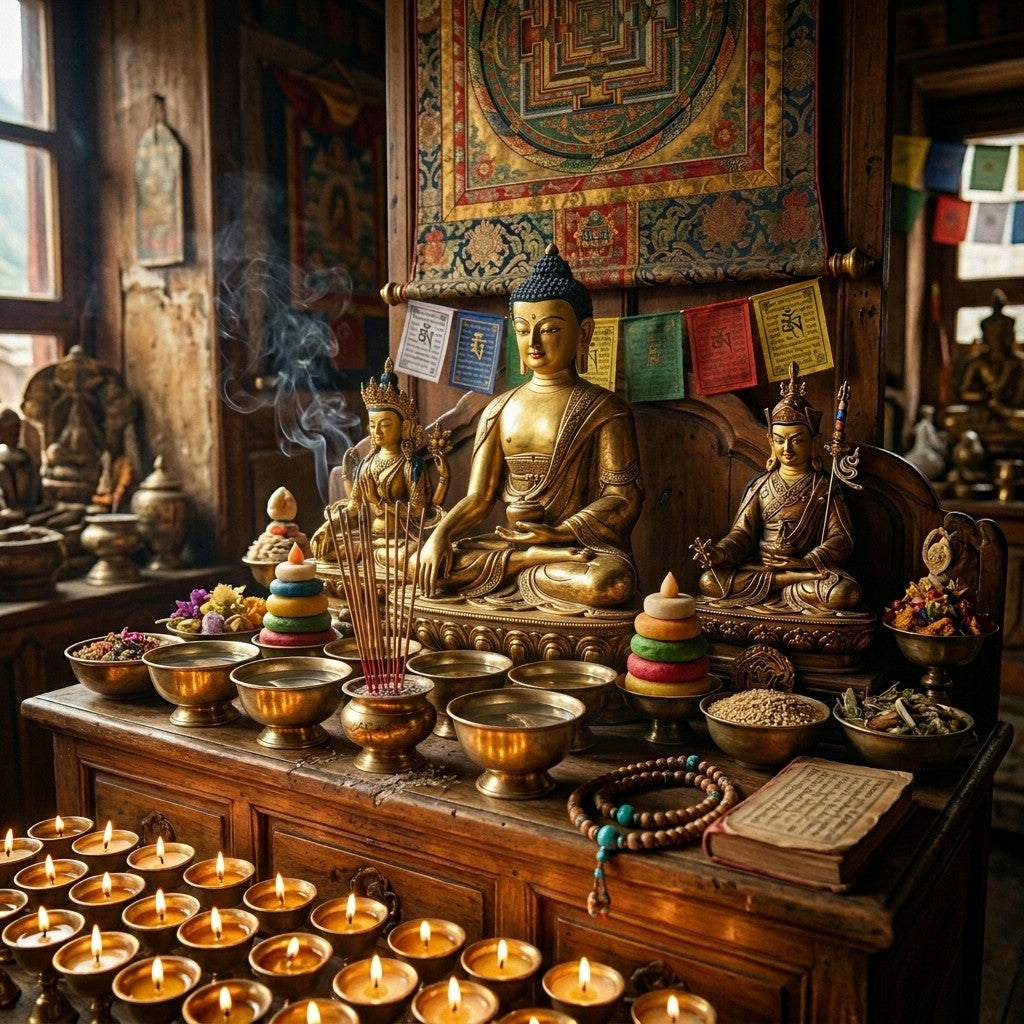
What is a thangka and how does it differ from an ordinary picture?
A thangka is not a picture in the ordinary sense. It is a meditative object, a tool of practice and an expression of Tibetan art that developed over centuries in monasteries and studios. The word thangka comes from Tibetan and means something like rolled-up image, a reference to the traditional way thangkas are kept and carried. Rolled up, wrapped in cloth, carried from place to place.
Making a thangka is a demanding, meditative process. A trained thangka painter spends years learning the iconographic rules, the proportions of the deities, the meaning of the colours, the symbolism of every detail. A single thangka can take months or years. The colours are made from natural minerals, plants and gemstones. Gold is used for outlines and details, often real gold leaf, polished with an agate stone until it shines.
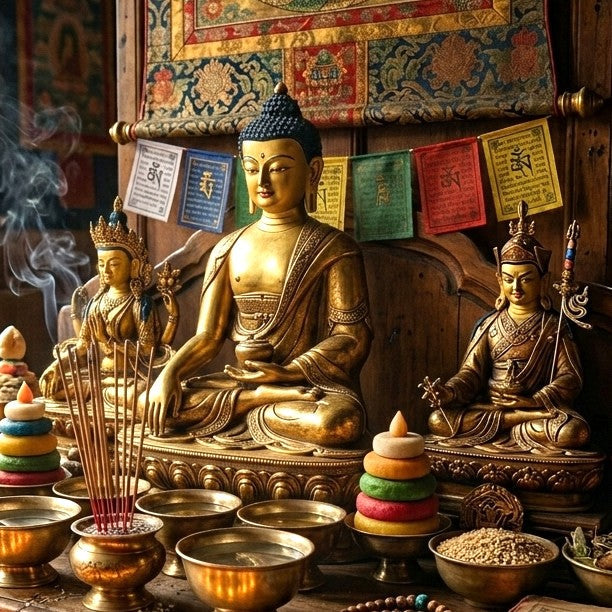
Thangkas show deities, mandalas, cosmological depictions and scenes from the life of the Buddha or of great masters. Every detail carries meaning. The position of the hands, the colour of the robe, the objects a deity holds, all of this is fixed by iconographic rules that are centuries old and passed on from one generation to the next.
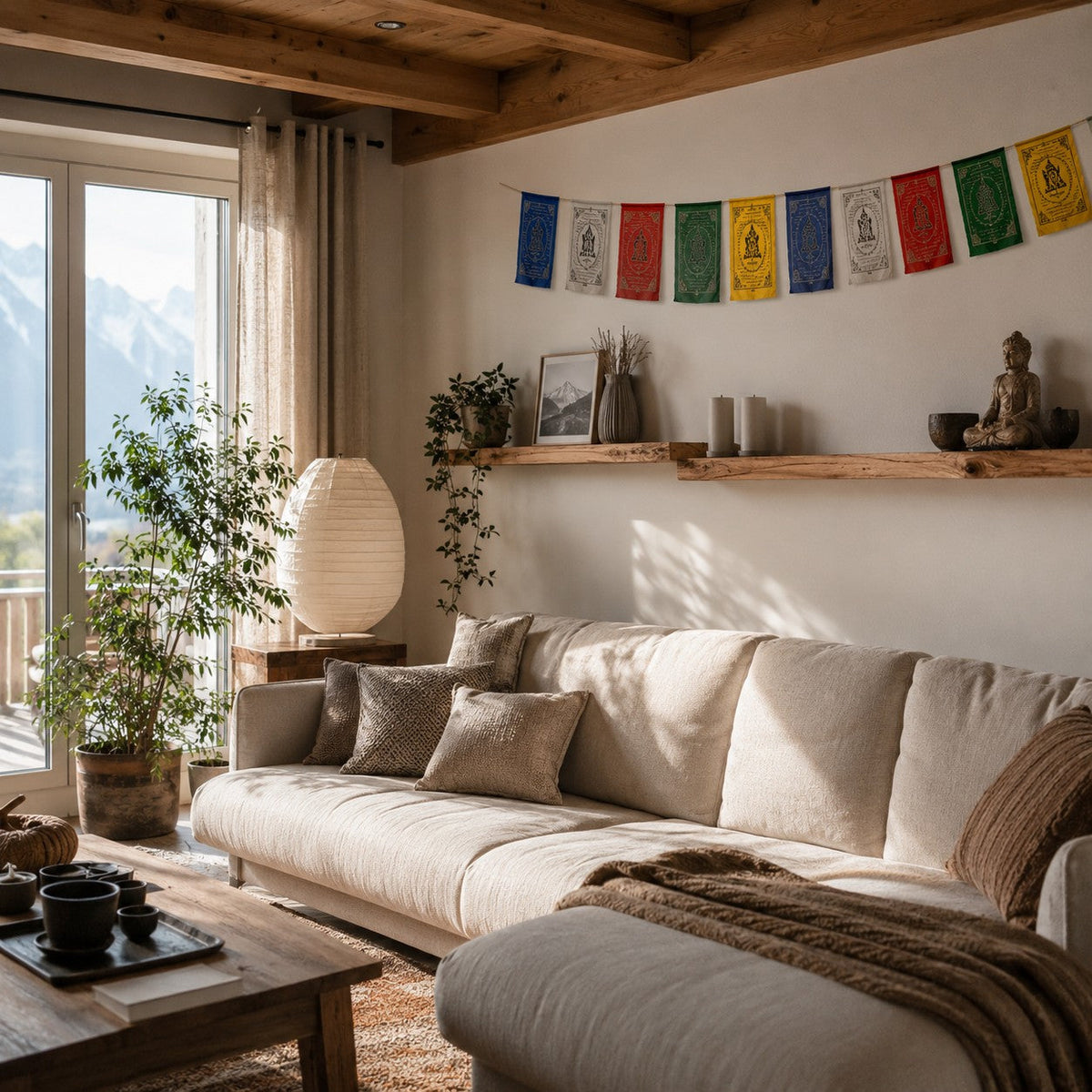
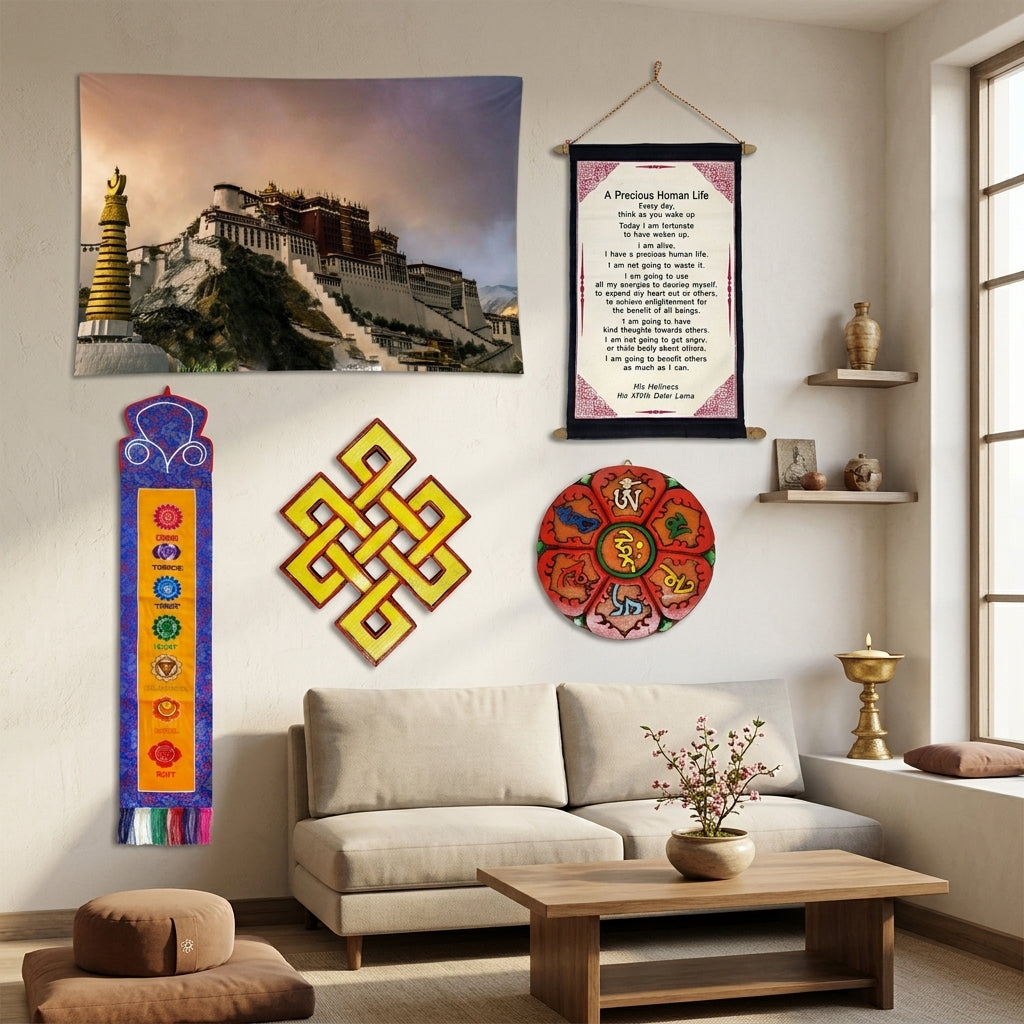
Hanging a thangka on the wall changes the atmosphere of a room in a way that is hard to describe. It brings a quality of stillness, depth and presence that an ordinary picture rarely reaches. It is not a decorative object. It is a window into another dimension of perception.
At tibet-markets.ch we carry thangkas and wall hangings in various sizes and finishes, all authentically handmade and iconographically correct. We are glad to advise you personally on choosing the right piece.